Matching students with tutors based on schedule compatibility — not just subjects
Matching students with tutors based on schedule compatibility — not just subjects.
Scope: Interaction design & prototyping
Basis: Personal observation of tutoring platforms
Role: UX Design
Role: UX Design
Scope: Interaction design & prototyping
Focus: Availability-driven matching
Project basis: Personal observation of tutoring platforms
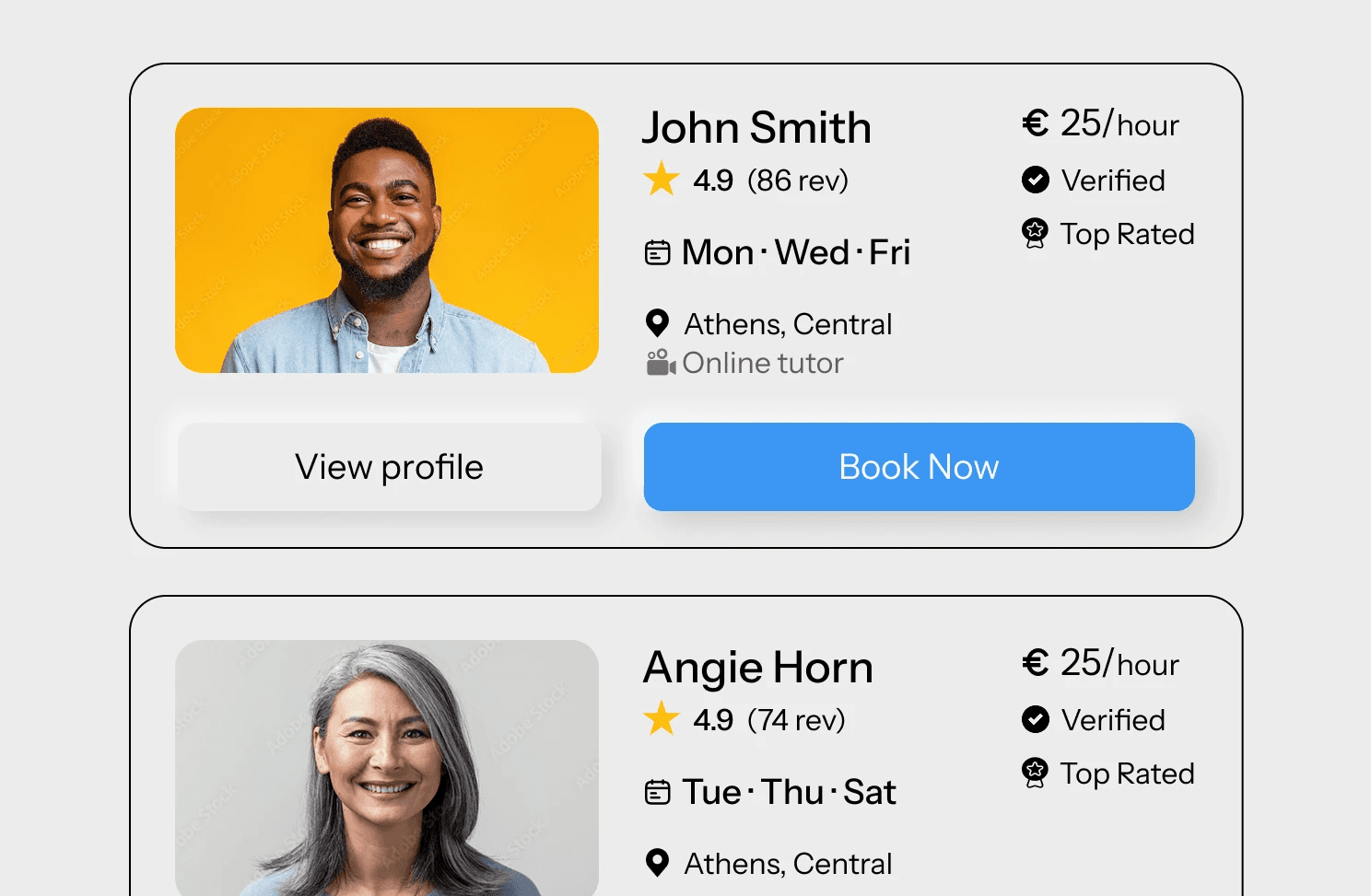

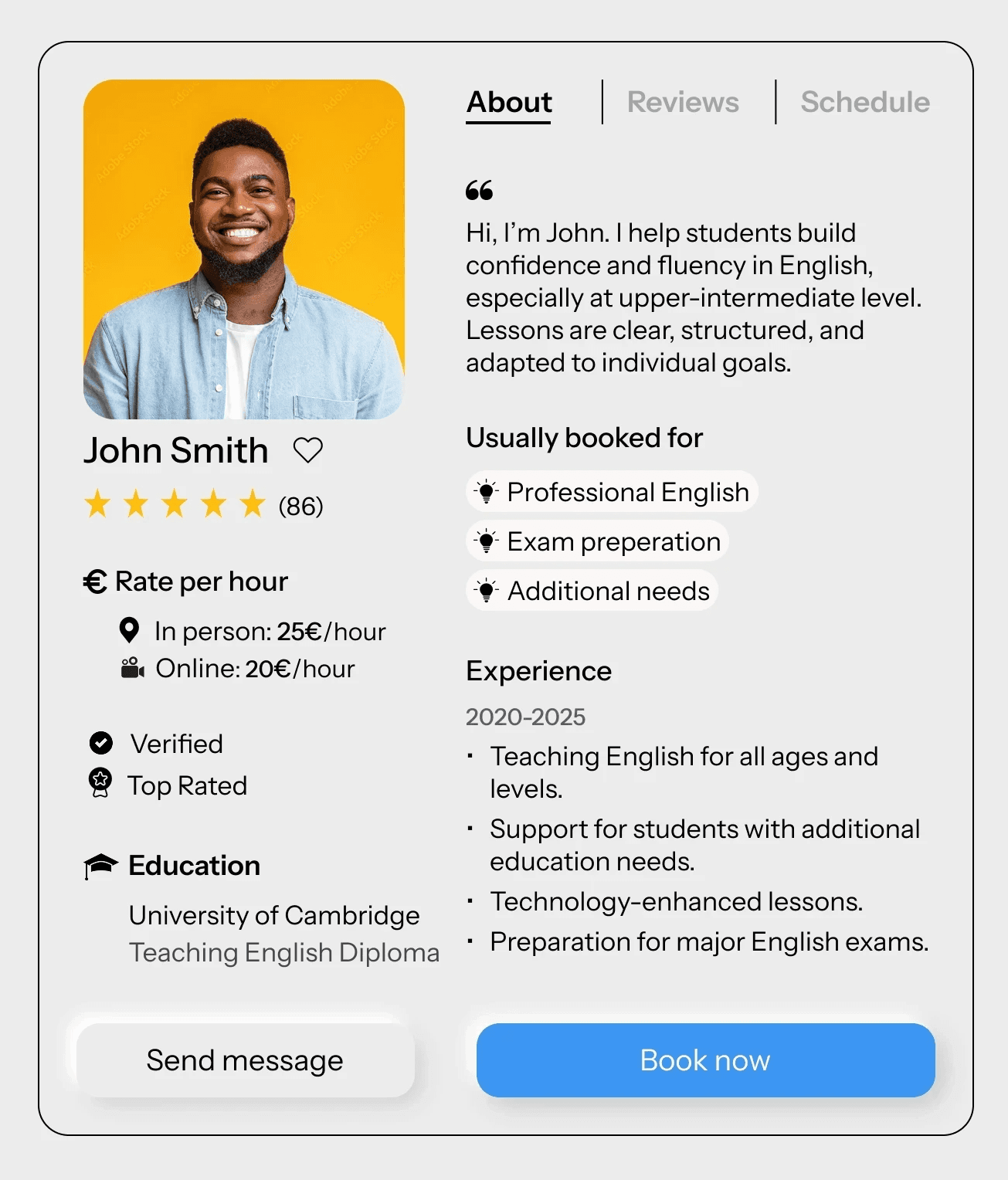
Prioritising schedule compatibility earlier in the matching process
Problem
Choosing a tutor involves multiple factors, but current approaches don’t always account for what makes a collaboration sustainable.
Choosing a tutor involves multiple factors, but current approaches don’t always account for long-term fit.
Lack of aligned decision-making
Parents evaluate tutors based on trust, cost, and location, often treating these factors independently.
Lack of aligned decision-making
Parents consider trust, cost, and location separately.
Over-reliance on perceived trust
Ratings and recommendations can become primary indicators, even though they don’t guarantee a good long-term fit.
Over-reliance on perceived trust
Ratings and recommendations can dominate decisions without guaranteeing a good long-term fit.
Late consideration of availability
Schedule compatibility can be considered late in the decision process, leading to mismatches even after a tutor seems suitable.
Late consideration of availability
Schedule compatibility may be considered late, leading to mismatches even after a tutor seems suitable.
Core insight
Schedule compatibility is often considered late, yet it can determine whether a tutoring relationship can actually work.
Core insight
Schedule compatibility is often considered late, yet it can determine whether a tutoring relationship can actually work.
Validation
This was a self-initiated concept based on personal observation, without formal user research or usability testing. The proposed experience therefore represents hypotheses requiring validation with students, tutors, and parents.
This was a self-initiated concept based on personal observation, without formal user research or usability testing. The proposed experience therefore represents hypotheses requiring validation with students, tutors, and parents.
Design Approach
Prioritizing availability in discovery
Availability is surfaced early in the browsing experience, allowing schedule compatibility to be assessed before engaging further. Rather than requiring users to open a tutor profile before seeing their schedule, I chose to surface availability in the initial comparison view to reduce unnecessary exploration.
Prioritizing availability in discovery
Availability is surfaced early, so users can assess schedule fit before exploring further. This avoids opening profiles just to check availability.
Supporting faster compatibility checks
Tutor cards are structured to surface key decision factors — including schedule, cost, and credibility — at a glance. Rather than exposing full tutor profiles during browsing, I kept the initial cards focused on the factors needed for an early decision, leaving deeper evaluation to the profile view.
Supporting faster compatibility checks
Tutor cards surface schedule, cost, and credibility at a glance. Full details stay in the profile for deeper evaluation.
Balancing trust with practicality
Rather than making ratings and reviews the dominant signal, I treated them as supporting evidence and gave greater prominence to practical schedule fit.
Balancing trust with practicality
Ratings, reviews, and verification support decisions without dominating them. Practical schedule fit remains the primary signal.
Reducing wasted exploration
Making availability visible upfront helps users avoid pursuing tutors who may not fit their schedule long-term. I chose this over a profile-first approach because schedule incompatibility can invalidate an otherwise suitable tutor before deeper evaluation even begins.
Reducing wasted exploration
Visible availability helps users avoid unsuitable tutors early. This reduces unnecessary profile exploration.
Solution
Making schedule compatibility visible
Availability is surfaced directly in tutor previews, allowing users to quickly assess whether a tutor fits their weekly schedule.
Making schedule compatibility visible
Availability is surfaced directly in tutor previews, allowing users to quickly assess whether a tutor fits their weekly schedule.
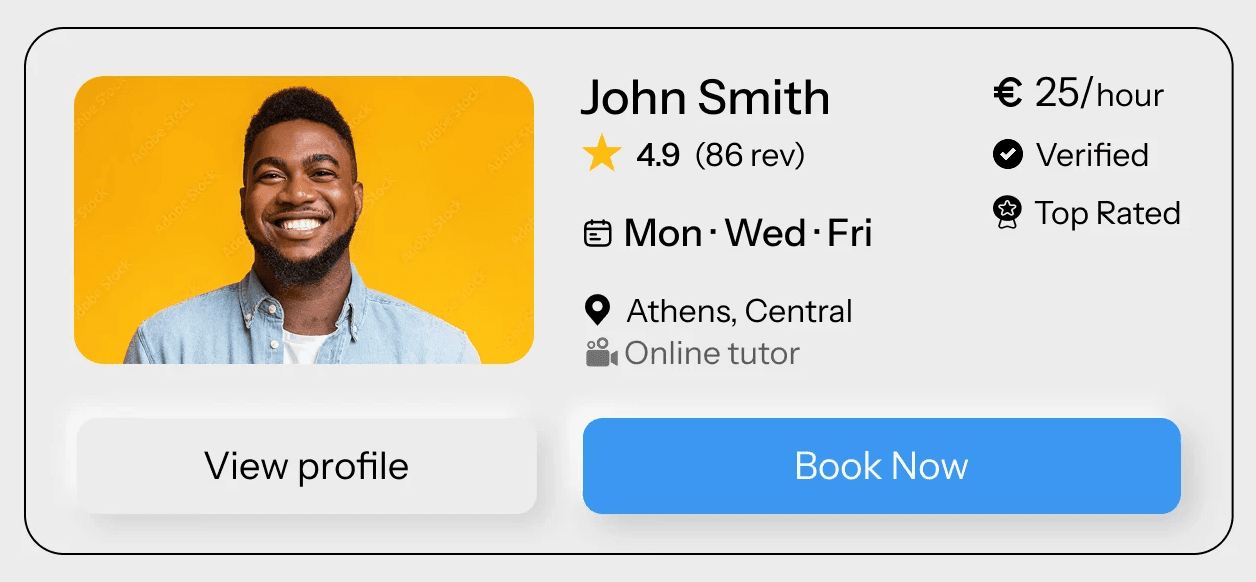
Schedule fit is clear upfront, before deeper evaluation.
Schedule fit is clear upfront, before deeper evaluation.
How matching works
01 — Evaluate tutor
Focuses on qualitative fit only after quantitative constraints (time, budget) are already met.
Focuses on qualitative fit only after quantitative constraints (time, budget) are already met.


02 — Check availability
Introduces a granular calendar only when the user has shown high booking intent.
The tutor’s schedule is explored to confirm compatibility and select a suitable time slot.


03 — Confirm booking
A frictionless final step designed to lock in the decision without secondary distractions.
Once a suitable slot is found, users proceed with booking, completing the decision process.

Reflection